Parallel inverters
More is simply better
1/15/20262 min read


Why 2–6 Inverters in Parallel Often Beat One Big Inverter
When sizing up your solar or off-grid power system, the choice between one massive inverter and several smaller ones working in parallel (typically 2–6 units) can make a huge difference in real-world performance. Modern hybrid and off-grid inverters from brands like Victron, Growatt, Deye, or EG4 are designed for easy parallel operation — and there are some compelling reasons many experienced DIY-ers and installers prefer the multi-unit approach.
Here are the main advantages:
1. Dramatically Less Downtime – True Redundancy
The biggest single benefit is redundancy. If your one 12 kW inverter fails (due to a component issue, firmware glitch, overheating, or just bad luck), your entire house goes dark until it's repaired or replaced — which can take days or weeks.
With 3× 5 kW inverters in parallel, when one unit has a problem:
The remaining two keep running (delivering ~10 kW)
You still have lights, fridge, pumps, and internet
You can often isolate the faulty unit and keep using the system while waiting for service
In off-grid living or during frequent power cuts, this difference between "partial power" and "zero power" is priceless.
2. Easier Scalability & Future-Proofing
Parallel systems let you grow gradually without huge upfront cost.
Start with 2× 6 kW inverters (12 kW total). Later add a third or fourth when you buy an EV, add heat pumps, or expand the battery bank. Most quality parallel-capable inverters sync perfectly as long as they're the same model and firmware family.
Buying one giant 20–30 kW inverter from day one usually costs more per kW and locks you in — upgrading later means replacing the whole expensive unit.
3. Better Surge & Load Handling + More "Strong" Phases
Multiple inverters share the load, so each runs cooler and handles surge loads (starting big motors, welders, pumps) more comfortably.
Many setups use 2–3 inverters to create a very robust 230/400 V three-phase system — something that's hard or impossible with a single inverter unless you buy an expensive dedicated 3-phase model.
Even in single-phase countries, paralleling two units often gives you double the continuous amps on the same phase, making heavy 230 V loads (sauna, induction hobs, large air conditioners) much happier.
4. Load Sharing = Longer Life & Higher Efficiency
Parallel inverters automatically balance the load among themselves. No single unit is stressed 100 % of the time → lower operating temperature → longer lifespan of capacitors, fans, and IGBTs.
Many users report that well-balanced parallel systems run noticeably cooler and quieter than the same total power in one big box.
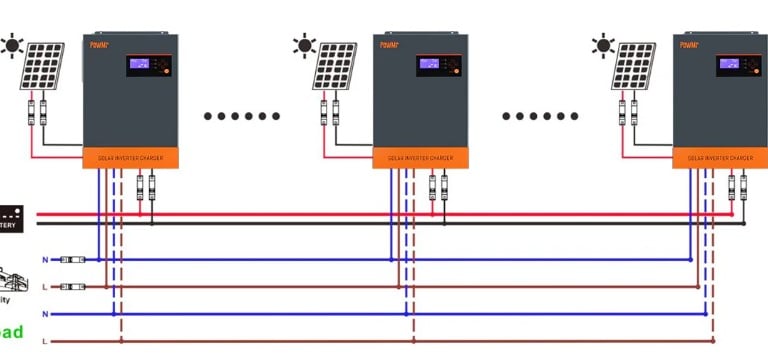
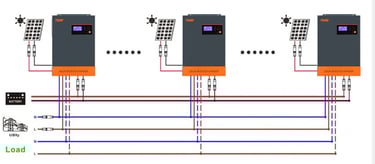
Here is a visual example of parallel setup in action:
(Notice how the units share DC input and combine AC output seamlessly.)
Bottom line: 2–6 inverters in parallel = less risk of total blackout, easier growth, stronger phase power, and better long-term value.
If you're planning a serious home energy system in 2026, think twice before putting all your power eggs in one big inverter basket!